Download Now
July 7, 2026

From AI Coding Experiments to a Spec-First Mobile Workflow

🤖 AI coding agents helped our mobile team move faster, but speed without structure can create drift. Here’s how we turned AI adoption into a disciplined engineering workflow that kept iOS and Android aligned, reviewable, and human-owned.

Challenge Approach Results
  • AI coding was useful, but prompt-first workflows did not scale cleanly
  • iOS and Android needed one product behavior across two implementations
  • Generated code still needed strong review, validation, and ownership
  • Move from prompt-first to spec-first development
  • Use one behavioral contract for iOS, Android, engineers, and AI agents
  • Keep architecture, testing, security, and release decisions with engineers
  • More consistent cross-platform behavior
  • Faster context handoff between engineers and AI sessions
  • PR reviews anchored to acceptance criteria, not interpretation
  • A reusable AI adoption pattern for mobile teams

In this post, we’ll share the workflow, guardrails, and lessons that helped us make AI-assisted mobile development practical for production engineering.


Why speed needed structure

Our mobile engineering team saw the same promise many teams see in AI coding agents: faster implementation, quicker iteration, and less repetitive work.

But the first lesson was not about speed. It was about control.

For cross-platform mobile teams, one product behavior usually becomes two implementations: iOS and Android. If each AI session starts from a different prompt, context window, or interpretation of the requirement, both platforms can look correct in isolation while still drifting from each other.

We needed a way to adopt AI without weakening the engineering discipline that keeps production systems reliable. That led us to a spec-first workflow.

📌 The shift: not “let AI write more code,” but “give AI a clearer engineering contract.”

Where prompt-first AI breaks down

A common AI-assisted workflow starts with a prompt like:

“Build this feature.”

For small changes, that can work. But real mobile features usually include loading states, failure paths, retry behavior, platform-specific UX, analytics, accessibility, QA scenarios, and release constraints.

When that context lives only in a prompt, it is easy to lose. A new AI session starts with a different context window. A different engineer explains the requirement slightly differently. iOS and Android can both look correct in isolation while still diverging.

🔁 Before: iOS and Android implemented the same failure flow from separate prompts. One showed retry, while the other exited the flow.
✅ After: the shared spec defined failure and retry behavior upfront, so both platforms implemented from the same contract.

That is the real value: not just faster coding, but clearer alignment on what “correct” means.


The shift: specs before code

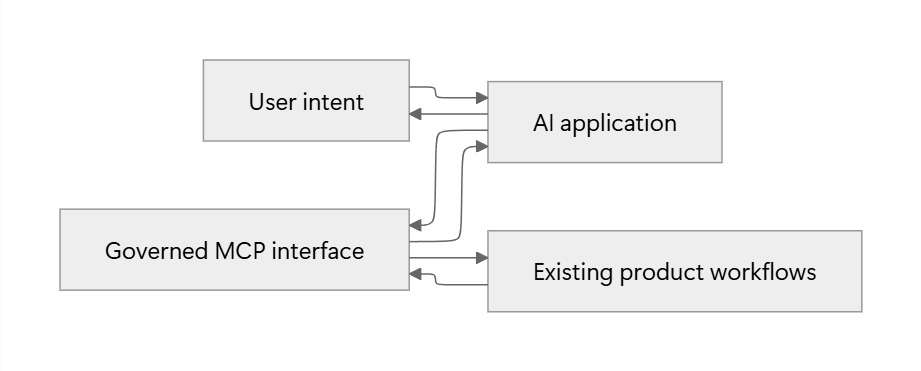
Instead of asking an AI agent to jump directly from feature idea to implementation, we put a spec in the middle.

The spec describes the intended behavior in a way that is human-readable, platform-agnostic, scenario-based, specific enough to validate against, and abstract enough to avoid exposing private implementation details.

At a high level, the workflow turns product intent into an approved behavioral contract before any platform implementation begins.

📌 Rule: AI can help produce the implementation, but the spec defines what correct means.

What the spec actually contains

In this workflow, a spec is not a full PRD, design brief, or test plan. It is a focused engineering artifact that describes expected behavior without prescribing private implementation details.

A good spec answers:

  • What should the user be able to do?
  • What happens on success?
  • What happens on failure?
  • What should be shown while work is in progress?
  • What should never happen?
  • What must remain consistent across platforms?

A simplified public-safe example:

Spec Section Behavior
Requirement Start a secure flow
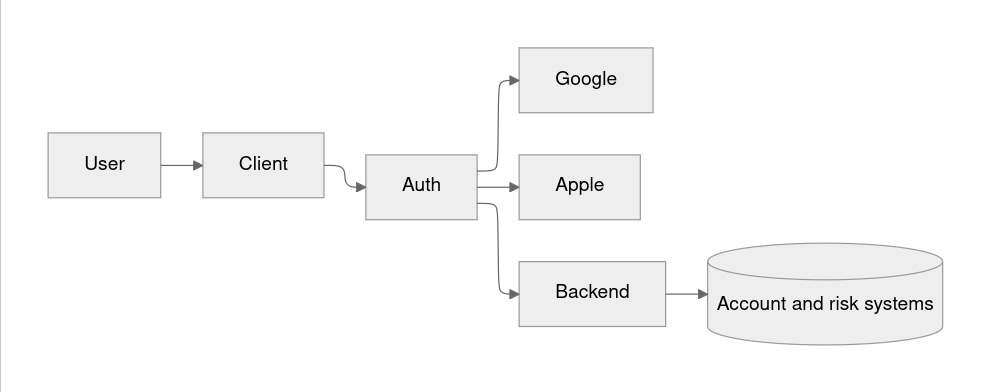
The system SHALL request a fresh session token whenever the user starts the flow.If the token request fails, the system SHALL show a recoverable error and SHALL NOT continue.
Scenario: Success
  • GIVEN the user starts the flow
  • WHEN the app requests a token
  • THEN the app continues
Scenario: Failure
  • GIVEN the user starts the flow
  • WHEN the token request fails
  • THEN the user sees an error with retry

The workflow: propose, implement, validate

We think about the workflow in three steps.

Step What happens Why it matters
Propose Turn product intent into a behavioral spec and scoped platform tasks. Aligns the team before code exists.
Implement Use AI agents to help execute iOS and Android tasks. Increases implementation leverage while staying anchored to the spec.
Validate Review behavior, test on devices, and approve the pull request. Keeps correctness and release readiness human-owned.

This keeps the workflow practical: AI accelerates implementation, while engineers keep control of correctness.


What we refused to automate

AI adoption worked because we were explicit about the boundary. The agent could accelerate implementation, but it could not own the decisions that define production quality.

We kept these areas human-owned:

  • Architecture decisions: AI can suggest options, but engineers decide what fits the codebase.
  • Security-sensitive logic: trust boundaries, credentials, permissions, and abuse prevention require human review.
  • Code review: generated code must meet the same standards as any other contribution.
  • Device testing: mobile UX still needs real interaction on simulators and physical devices.
  • Release approval: AI can help prepare a candidate, but humans decide when it is safe to ship.
🧭 Principle: AI proposes and accelerates. Engineers own architecture, validation, correctness, and release decisions.

Lessons from scaling AI adoption

A few lessons shaped how we now think about AI-assisted mobile development.

1. Specs should be precise, not huge

A vague spec does not help the AI or the reviewer. An overly detailed spec becomes hard to maintain and starts leaking implementation decisions. The sweet spot is behavior-level precision: clear scenarios, expected states, and acceptance criteria.

2. Approval gates save time later

Reviewing a spec before implementation can feel like extra ceremony. In practice, it catches misunderstandings before they become code, tests, and PR comments.

3. Examples beat broad instructions

AI agents respond better to concrete examples than generic direction. GIVEN / WHEN / THEN scenarios are easier to follow than broad intent.

4. Shared behavior does not mean identical code

The spec aligns iOS and Android behavior. Each platform should still use native patterns.

5. The artifact outlives the AI session

AI sessions are temporary. Specs and task lists are durable. They help future debugging, onboarding, QA, and follow-up work.


Where this pattern works best

This workflow is most useful when:

  • Multiple platforms need to implement the same behavior
  • A feature touches user trust, identity, payments, compliance, or sensitive user flows
  • Requirements are likely to evolve
  • QA needs clear scenarios before implementation is complete
  • Several engineers or AI agents are contributing in parallel

It may be overkill for small copy updates, throwaway prototypes, low-risk visual tweaks, or changes with no cross-platform behavior.

The goal is not to add process everywhere. The goal is to add structure where ambiguity, risk, or cross-platform consistency matters.


Takeaways for teams adopting AI

  • AI adoption needs an operating model. Agents are more useful inside clear constraints, review gates, and ownership boundaries.
  • The problem is not AI speed; it is AI direction. Better inputs create better candidate implementations.
  • Specs make AI-assisted work reviewable. They give engineers a contract to validate against.
  • Cross-platform consistency starts before implementation. iOS and Android should derive from the same behavioral source of truth.
  • Human validation remains the release gate. AI can propose and accelerate, but engineers own correctness.
  • Public engineering writing should teach the pattern, not reveal the internals. Share the workflow and lessons learned without exposing code, sensitive logic, or infrastructure.

The real win was not that AI helped us write code faster.

The win was that our engineering team turned AI-assisted development into a disciplined practice: spec-first, reviewable, cross-platform, and human-owned. That is what made the workflow scalable.