September 30, 2025
Building an AI KPI Agent: From Raw Signals to Weekly Strategy
Built By: Daniel Munoz & Sophia Guan
| Challenge | Approach | Results |
|---|---|---|
| KPI reviews began with long recaps across scattered sources Numbers lacked the “why” from real user conversations Teams entered meetings without a shared weekly story |
AI-first, serverless pipeline on AWS Fuse structured KPIs with qualitative community signals Publish a concise, Slack-ready narrative each week |
“KPI context recap” cut from ~25 min to <5 min Faster decisions between meetings 85% teammates read the agent’s summary pre-meeting Cost ≤ $5 per month |
Why We Built It?
At SoLo Funds, every loan journey emits signals — from marketplace listing to funding and repayment. Each week we track core KPIs and scan community feedback, but the narrative was hidden: metrics in dashboards, context in chats. We needed a single weekly story that anyone could absorb in minutes — before the meeting.
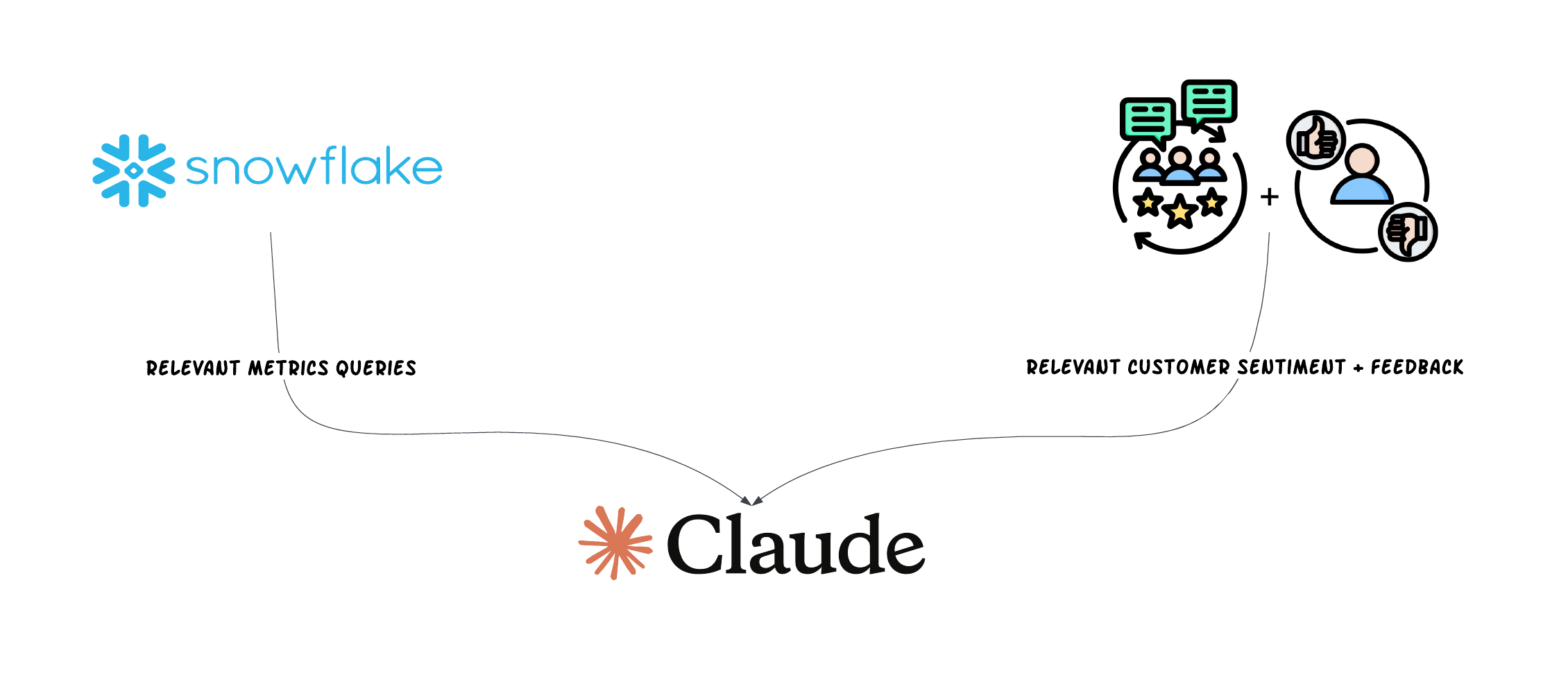
Enter the KPI Agent: an AI teammate that combines Snowflake KPIs with community conversations, synthesizes the what and the why, and ships a crisp summary to Slack.
Alt: High-level concept — KPIs + community signals summarized weekly in Slack
Architecture at a glance
Alt: System diagram — Lambda orchestrates Quantitative + Qualitative Data extraction → Claude → Slack; artifacts and logs persisted in S3
Alt: ETL flow — Snowflake KPIs and qualitative community feedback exports feed Claude; outputs posted to Slack and archived in S3
- AWS Lambda orchestrates the weekly run
- Snowflake for KPI queries
- Export text filled with qualitative community inputs
- Claude (LLM) for insights and risks
- Slack webhook for distribution
- Ephemeral storage during execution
- S3 artifacts: CSVs, JSON insights, prompts, logs
- Secrets in AWS services like Secrets Manager
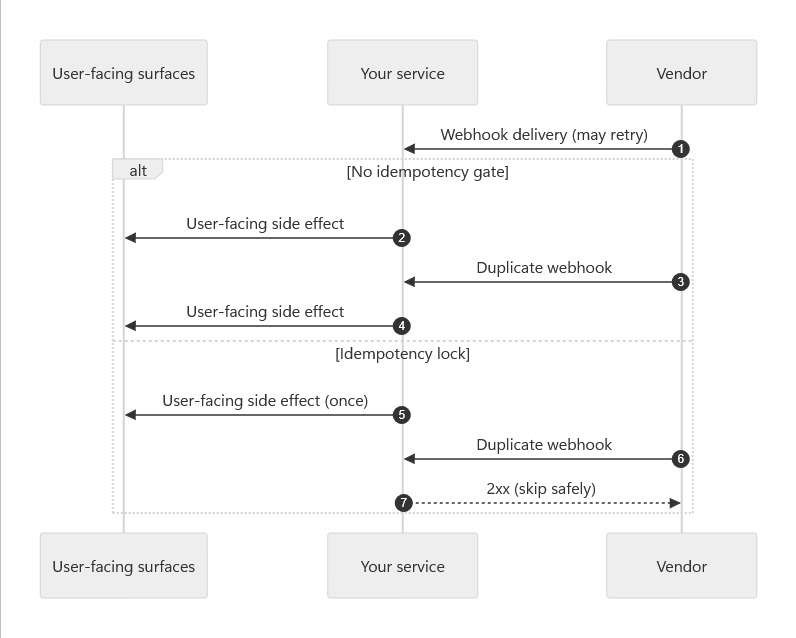
- Idempotent runs with full traceability
The Pipeline
- Quantitative layer — Run Snowflake queries, compute WoW deltas, render a human-readable KPI digest
- Qualitative layer — Export threads of community feedback and customer sentiments, normalize text, summarize themes: bugs, praise, feature requests.
- AI layer — Prompt Claude to fuse both streams into insights, risks-to-watch, and action items
- Delivery — Post a Slack summary with links to artifacts; archive all outputs in S3 for auditability
Prompting strategy (JSON-First)
To make the output reliable and parseable:
- Constrain the model to a strict JSON schema
- Ask for short, complete sentences for insights and risks
- Include the KPI digest and community summary as explicit, labeled inputs
Here’s an example of what that schema would look like:
{
"insights": ["string"],
"risks": ["string"],
"actions": ["string"],
"confidence": "low|medium|high"
}
Example system guidance:
- “You are a financial analyst. Synthesize structured KPIs and qualitative signals.”
- “Prefer causal explanations and trend context over raw numbers.”
- “Return only valid JSON. No prose outside the JSON.”
What The Slack Post Includes
- Top 3 insights with the brief “why”
- 2–3 risks to monitor
- 3 action items with owners
- Links to S3 artifacts and source dashboards
Reliability & Ops
- Deterministic job kickoff via schedule or manual trigger
- Defensive JSON parsing with fallbacks to error logs
- Prompt and schema versioning for reproducibility
- End-to-end observability via structured logs
Pricing
- WS Lambda orchestrated through EventBridge, priced at a fraction of a dollar for weekly orchestration
- S3 storage: pennies for artifacts and logs
- Compact prompts and strict JSON schemas reduce token spend
Impact
- Automated reporting reduces prep time by hours per week
- Meetings shift from recap to decision
- Shared context across product, growth, and engineering
- Enterprise-grade insight at startup-scale cost
Implementation Checklist
- Define KPIs and sources of truth
- Author Snowflake queries and weekly digest job
- Build Community feedback export and text normalization
- Design JSON schema and prompts
- Implement Lambda orchestrator and Slack publisher
- Set up S3 buckets and retention policies
- Add secrets management and IAM hardening
- Ship v1, measure meeting time saved
What’s Next
- Interactive Slack drill-downs
- Forecasts and anomaly detection
- Natural-language Q&A over historical context
- Role-based slices for execs, PMs, and engineering
The SoLo Mission Connection
At SoLo Funds, our work isn’t just about building clever systems — it’s about building trust, accessibility, and resilience in financial services for people too often overlooked. Traditional systems frequently shut out everyday folks when they need help the most. We exist to change that.
By investing in infrastructure that is lean, predictable, and scalable, we are able to:
Reinvest Savings Into User Value
Efficiency gains don’t vanish into internal budgets — they become better pricing, faster features, and more support directed at our community.
Ensure We Remain Knowledgeable
By combining raw KPIs with community voices, the KPI Agent ensures we’re not just tracking numbers, but showing why things are happening. This clarity helps us spot pain points early and act quickly to keep our platform reliable for members who depend on it.
Stay Sustainable and Responsible
When you’re serving an application to users, every dollar counts. Cost controls and architectural discipline make it possible to hold service levels high without sacrificing viability.
Because of these optimizations, our technological backbone becomes a force multiplier. Efficiency gained isn’t just a means to reduce dollars spent — it’s a lever that lets us reorient everything we build, every decision we make, toward making financial services more equitable, more dependable, more human.
Appendix: Standards We Followed
- Cloud: Serverless-first (Lambda, S3). Principle of least privilege for IAM
- Data: Versioned artifacts, query reproducibility, artifact lineage
- AI: JSON-constrained outputs, prompt versioning, evaluation corpora
- DX: One-command reruns, clear failure modes, observability baked in